


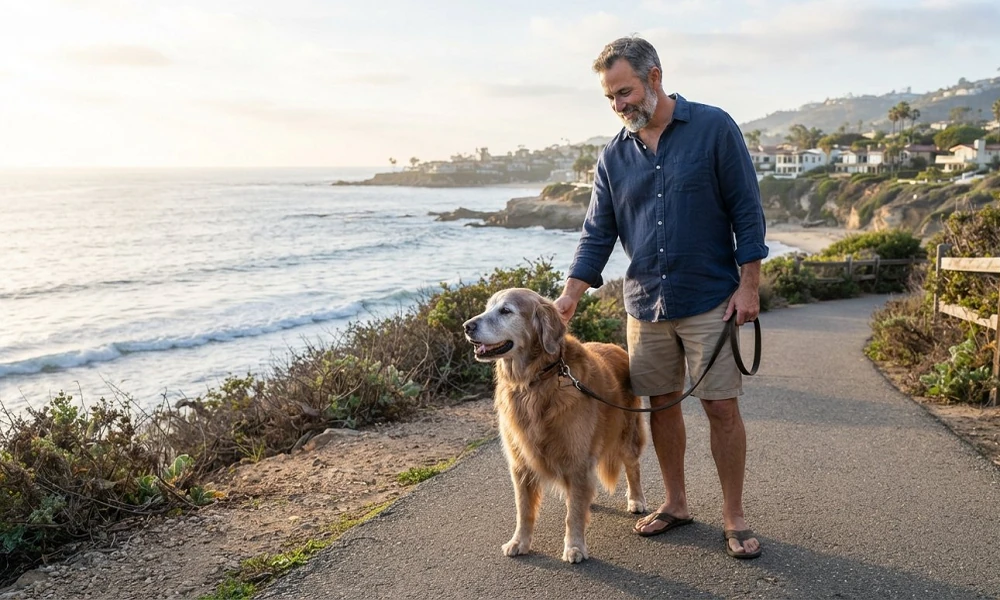
A familiar walk can reveal a quiet change. An older dog pauses at the steps, takes longer to stand or turns toward home sooner than usual. These moments are easy to explain away as age. Yet reduced mobility can reflect pain or another health problem that deserves attention. Recognizing a change early gives owners a chance to discuss care before everyday routines become harder.
Aliso Beach Animal Clinic provides senior pet care and individualized support for dogs experiencing stiffness, discomfort and changes in movement. The starting point is understanding what has changed and why.
Notice the Small Changes in Everyday Movement
Mobility problems do not always begin with an obvious limp. A dog may hesitate before getting into the car, avoid a slippery hallway or stop following family members upstairs. Difficulty settling comfortably can also be worth mentioning at an appointment.
Watch for a pattern rather than waiting for a dramatic symptom. Does standing up take longer after sleep? Has the usual walk become shorter? Is your dog avoiding activities that previously brought enjoyment?
The American Animal Hospital Association describes signs of pain in pets, including stiffness, reluctance to move and changes in behavior. A dog does not need to cry for discomfort to be significant.
Arrange an Exam When Mobility Changes Persist
Recurring stiffness, repeated limping or increasing difficulty with normal activities warrants veterinary assessment. Contact the clinic when you notice these changes rather than waiting for the next scheduled wellness visit. New pain or a sudden limp deserves a prompt call for guidance.
For families seeking a Laguna Beach vet, Aliso Beach Animal Clinic offers evaluations for senior mobility concerns and chronic discomfort. Its approach considers the pet’s overall health, daily routines and individual needs.
Arthritis is one possible explanation, but an owner cannot establish the cause from appearance alone. Injuries and other orthopedic or neurological problems may also affect movement. Assuming every change is arthritis can delay the right evaluation.
Know Which Symptoms Need Immediate Help
A sudden inability to walk, dragging a limb, severe pain or collapse requires immediate veterinary attention. Abnormal breathing or a mobility problem following major trauma also calls for urgent help. These changes should not be watched at home to see whether they pass.
Aliso Beach Animal Clinic advises calling immediately during business hours for these symptoms or contacting a 24-hour emergency hospital after hours-call before arriving so the team can guide the next step. Life-threatening problems may require an emergency hospital even during the day.
Bring Useful Observations to the Appointment
Write down when the problem began, whether it developed suddenly and which activities seem difficult. Note changes in appetite, sleep or behavior alongside the movement problem. Bring a list of current medicines and supplements.
A short video of your dog moving naturally at home can help show changes that are less obvious during an appointment. Do not encourage stairs, jumping or extra walking to capture footage. Record only comfortable, ordinary movement.
The clinic’s mobility assessment may include an examination, pain evaluation and orthopedic or neurological assessment. Diagnostic testing may be recommended depending on the findings. Owners can ask what each test would clarify and how it could influence treatment.
Build Support Around Your Dog’s Needs
There is no single mobility plan for every older dog. Aliso Beach Animal Clinic describes care that may combine medication, weight guidance, nutrition support, home adjustments and activity changes. Acupuncture or therapeutic laser treatment may be considered as supportive options when appropriate.
Treatment should begin with veterinary assessment. Supplements alone are not an adequate response to serious pain, and a therapy that suits one dog may not suit another.
Avoid giving human pain medicines or medication left over from another pet without veterinary direction. The FDA’s guidance on pain relievers for pets explains why these choices can cause harm. Discuss any medicine or dose change with the veterinarian.
Make Daily Life Easier and Track Progress
Ask about non-slip flooring, accessible resting areas and safe ways to reduce unnecessary climbing. Exercise recommendations should match the diagnosis and your dog’s comfort. Forcing a painful dog through a longer walk can make an already difficult routine harder.
Track practical goals: rising more comfortably, resting peacefully or enjoying an appropriate walk. Share improvements and setbacks at follow-up visits so the plan can be adjusted.
Growing older should prompt closer attention to comfort. If your dog’s movement has changed, call Aliso Beach Animal Clinic at (949) 499-4190 to arrange an assessment and discuss the next steps.
