


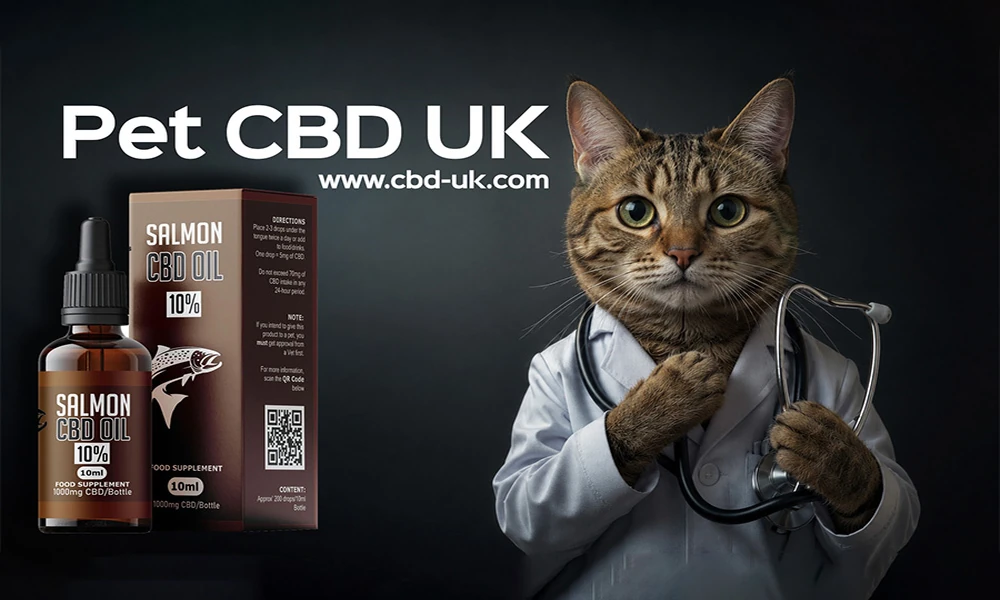
The first thing most people notice when they begin looking into CBD is the sheer number of companies selling it. Some have been established for years. Others appear almost overnight, often with polished packaging, confident claims and websites that look every bit as professional as the businesses that have been operating for much longer.
That makes choosing between them difficult, especially when you are researching CBD in connection with an animal. A search for PET CBD UK can produce pages of results, but a high position in a search engine does not automatically tell you whether a company is experienced, transparent or responsible. It only tells you that the page has been found.
The more useful question is not simply, “Who sells CBD?” It is, “Which company has given me enough reliable information to deserve my trust?”
That distinction matters. CBD is not a product that should be chosen on attractive branding alone, and it should never be treated like an impulse purchase. In the UK, the position surrounding CBD and animals is tightly controlled. The Veterinary Medicines Directorate states that CBD products for animals require a veterinary marketing authorisation and that, where no authorised veterinary CBD medicine is available, a veterinary surgeon may consider a legally obtained human CBD product under the prescribing cascade. Giving an animal an unauthorised CBD product without a veterinary prescription can be an offence. A responsible company should not try to hide, soften or talk around that position. It should explain it clearly and encourage owners to speak with their vet.
Trust Begins With What a Company Is Willing to Tell You
A trustworthy business does not make customers dig through pages of vague wording to discover who they are, where they are based or how to contact them.
Basic information should be easy to find. That includes a genuine business name, a working contact method, clear terms and conditions, delivery details and a sensible explanation of what the company actually does. None of this is glamorous, but it is often more revealing than the product photography.
When a company is open about its identity and its experience, customers can make a more informed judgement. When the same company also publishes clear information about CBD, testing, ingredients and UK guidance, it begins to demonstrate that it is interested in more than completing a quick sale.
The opposite is also true. A website may look impressive while saying almost nothing of substance. There may be large claims, countdown timers, endless discount offers and enthusiastic testimonials, yet no meaningful explanation of the product itself. That should make any careful buyer pause.
A trusted CBD company should make information easier to find, not harder.
Experience Is More Than a Date in the Footer
A company can claim to have years of experience, but experience is most convincing when it shows in the quality of its information.
Businesses that have worked in the CBD sector for a long time have seen the industry change. They have watched terminology evolve, regulations tighten, customer knowledge improve and low-quality operators come and go. They have also answered the same difficult questions repeatedly: What is the difference between CBD and hemp seed oil? What is CBD isolate? Why does THC matter? What should a laboratory report show? Why should a pet owner speak with a vet?
That accumulated experience should produce clearer explanations, not louder marketing.
Since entering the UK CBD industry in 2016, we have seen customers become far more careful about what they buy. In the earlier years, many people were still trying to understand what CBD was. Today, they are more likely to ask where the hemp came from, what extraction method was used, whether the batch was independently tested and how the company approaches compliance.
Those are better questions. They encourage better standards.
Longevity alone does not prove that every decision a company makes is correct, but a long trading history does provide useful context. A business that has remained available, answered customers consistently and adapted to regulatory change has demonstrated something that a newly created website cannot show immediately: a track record.
Education Should Come Before Persuasion
One of the clearest signs of a responsible CBD company is the amount of effort it puts into education.
A business that only publishes product pages is asking customers to make decisions without much background information. A business that publishes detailed guides, explains terminology, discusses testing and acknowledges the limits of what it can responsibly say is taking a different approach.
Good educational content should not read like a sales pitch disguised as advice. It should help whether or not the reader decides to buy anything.
For example, an honest article about pet CBD should explain that hemp seed oil and CBD are not the same thing. It should make the role of veterinary advice clear. It should avoid promising results or presenting CBD as a treatment for named conditions. It should also recognise that pet owners often encounter contradictory information and need a straightforward explanation rather than another exaggerated headline.
Education creates informed customers. Some businesses fear that informed customers will ask too many questions. Strong businesses welcome them.
A customer who understands the subject is better able to appreciate quality, spot weak claims and recognise the difference between a transparent company and one relying on clever presentation.
Look Beyond the Front Label
Packaging is designed to attract attention. That is not a criticism; it is simply what packaging does. The problem begins when the label creates an impression of quality that the company does not support with evidence.
Words such as “premium”, “natural”, “pure” and “high strength” appear everywhere. On their own, they tell you very little.
A more useful approach is to look past the front of the bottle and examine the details behind it.
Does the company provide a full ingredient list?
Does it identify the type of CBD used?
Does it explain the carrier oil?
Is the amount of CBD stated clearly?
Are batch details or testing information available?
Does the company distinguish between products for human use and products marketed for animals?
Is the wording measured and responsible?
These details allow a customer to assess the product rather than simply react to the design.
A company that has invested in quality should be able to explain what quality means in practical terms. It should not expect customers to accept the word “premium” without any supporting information.
Laboratory Reports Are Useful, but Context Matters
Independent laboratory testing is often treated as the final answer to every question about CBD quality. It is important, but it should be understood properly.
A laboratory report can provide information about the cannabinoid profile of a tested sample. Depending on the scope of the analysis, it may also cover other areas. What matters is that the report is relevant to the product or batch being discussed, comes from a credible laboratory and is presented in a way customers can access.
Simply placing a laboratory logo on a website is not the same as genuine transparency.
Buyers should be able to see enough information to understand what was tested and when. If a company talks constantly about testing but makes the reports impossible to locate, it is reasonable to ask why.
At the same time, laboratory reports should not be used to distract from everything else. A test result does not replace clear ingredients, responsible marketing, good customer support or compliance with UK rules. It is one part of the overall picture.
The strongest companies tend to treat testing as a normal quality-control measure rather than a dramatic marketing feature.
Be Careful With Reviews and Testimonials
Reviews can be helpful. They can tell you whether orders arrived on time, whether the company answered questions and whether previous customers felt well supported.
However, reviews have limits.
A customer testimonial is not scientific evidence, veterinary guidance or proof that a product is appropriate for another animal. Every pet has its own age, weight, medical history and circumstances. What one owner reports online should never be treated as a personalised recommendation for someone else.
Responsible companies understand this. They may display genuine service reviews, but they should not use dramatic customer stories to imply that CBD treats, prevents or cures veterinary conditions.
It is also worth looking at the nature of the reviews rather than the headline score alone. Do they sound varied and specific? Do they mention customer service, delivery and product information? Has the company replied calmly to criticism? A realistic collection of reviews often tells you more than a wall of perfect one-line praise.
Reviews are best used to assess the business experience, not to replace professional advice.
Customer Support Reveals a Great Deal
There is a simple way to learn more about a company: ask it a sensible question.
The quality of the reply can be revealing.
A knowledgeable and responsible business should be able to explain its ingredients, point you towards testing information and clarify its policies. When the question concerns giving CBD to an animal, it should not attempt to act like a veterinary surgeon. It should explain the regulatory position and direct the owner towards appropriate veterinary advice.
That boundary matters.
Poor support often takes one of two forms. The first is avoidance: vague replies that do not answer the question. The second is overconfidence: specific promises or instructions that go beyond what a retailer should responsibly provide.
Good support sits between those extremes. It is helpful without pretending to know the animal. It gives factual product information without making medical judgements. It respects the customer enough to be honest about what the company can and cannot advise.
Price Should Be Considered, Not Worshipped
Cost matters to almost every household, and there is nothing wrong with comparing prices. The mistake is assuming that the cheapest product offers the best value or that the most expensive must be the highest quality.
CBD prices can reflect a number of factors: raw materials, extraction, formulation, testing, packaging, customer support and the scale of the business. Price can also be influenced by branding and profit margin, so it should never be treated as proof of quality by itself.
A better comparison looks at what you are actually getting.
How much CBD is present?
What type of extract is used?
What is the bottle size?
Are the ingredients clear?
Is testing available?
Does the company provide proper support?
Has it explained the UK position responsibly?
Once those questions are answered, the price becomes far easier to judge.
Value is not simply the lowest number on the page. It is the relationship between cost, quality, transparency and service.
Red Flags Worth Taking Seriously
No single warning sign proves that a company is unreliable, but several together should encourage caution.
Be wary when a website makes sweeping medical claims, promises guaranteed outcomes or suggests that one product is suitable for every animal. Be equally careful when there is no clear company identity, no meaningful contact information, no ingredient detail and no discussion of veterinary guidance.
Constant urgency can be another warning. A genuine limited offer is normal retailing. A website where every product is permanently about to sell out, every discount ends in ten minutes and every visitor is pressured to buy immediately may be prioritising impulse over informed choice.
Copied or strangely generic content can also reveal a lack of care. If every article says the same thing, contains obvious contradictions or discusses UK rules using American terminology, the business may not have invested much effort in understanding the market it serves.
Trust your judgement. If the website leaves you with more questions than answers, there is no obligation to buy.
Why the UK Position Cannot Be an Afterthought
Pet CBD sits within a regulatory area where careful wording is essential.
The VMD’s position is not a minor disclaimer to be hidden at the bottom of a page. It should shape the entire way a responsible company communicates about CBD and animals. Businesses should not market unauthorised CBD products as veterinary medicines or encourage owners to administer them without veterinary involvement.
For the reader, this makes company behaviour a useful test of trust.
Does the business explain the rules plainly?
Does it avoid medical claims?
Does it encourage a conversation with a veterinary surgeon?
Does it distinguish factual information from sales language?
A company prepared to lose a quick sale rather than give irresponsible advice is demonstrating something valuable. It is showing that compliance and customer welfare matter more than short-term revenue.
That may not be as exciting as a bold product promise, but it is far more reassuring.
A Trusted Company Will Not Rush Your Decision
The best businesses understand that some customers need time.
They make information available, answer questions and allow people to decide without unnecessary pressure. They recognise that researching CBD for an animal may involve speaking with a veterinary surgeon, discussing existing medicines and considering whether CBD is appropriate at all.
That process cannot be responsibly compressed into a flashing “Buy Now” button.
A trusted company should be comfortable with a customer reading today, asking a question tomorrow and making a decision later. It should also be comfortable with the possibility that the customer’s vet advises against using CBD.
Real trust includes respect for decisions that do not produce an immediate sale.
Choosing the Business, Not Just the Bottle
When dozens of CBD products appear similar, it is tempting to focus on strength, bottle size and price. Those details matter, but they do not tell the whole story.
You are also choosing the company behind the bottle.
You are choosing whether its information appears accurate and balanced. You are deciding whether its testing is accessible, whether its customer support is useful and whether it treats UK guidance seriously. You are judging whether it has earned confidence through openness or simply captured attention through design.
There is no perfect checklist that removes every uncertainty, but careful research makes poor choices far less likely.
Look for an established identity.
Read more than the product page.
Check the ingredients.
Find the laboratory information.
Notice how the company discusses animals and veterinary advice.
Ask a question if anything is unclear.
Most importantly, do not let urgency, price or marketing claims make the decision for you.
What Deserves Your Trust?
A trusted CBD company does not need to be the loudest business in the search results. It needs to be one of the clearest.
It should tell you who it is, explain what it sells and be honest about the limits of the information it can provide. It should support its quality claims with meaningful detail, not just attractive words. It should welcome careful customers, respect veterinary guidance and avoid turning uncertainty into a sales opportunity.
For UK pet owners, those qualities are not optional extras. They are central to making a responsible choice.
The right company will not ask you to suspend your judgement. It will give you enough information to use it.
